

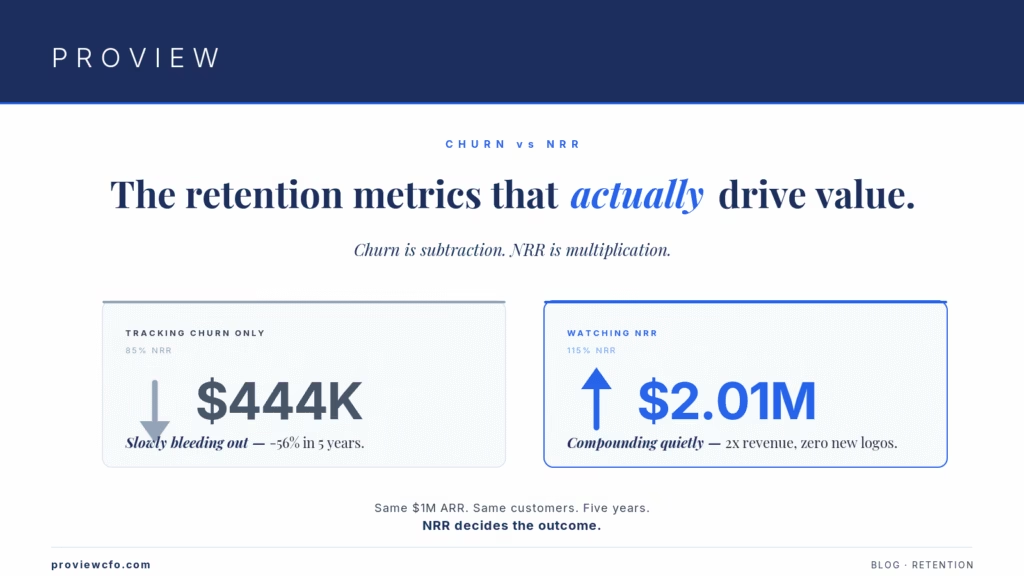
The Retention Metrics That Actually Drive Value
When it comes to client retention most business owners think to the number of customers that have left first = logo churn, or the number of unique logos that were customers but have now left. Most SMB owners have a general grasp of this one, however its much rarer for them to know their their Net Revenue Retention rate.
That’s backwards – because NRR is the single retention metric that determines whether your company is compounding or leaking.
NRR vs. churn: why one compounds and the other is just depressing
Churn is a subtraction metric: customers gone, revenue gone. Useful, but it only tells you what left.
NRR is a multiplication metric. It measures what happened to the revenue from the customers you already had. It catches three things at once:
- Logo churn (customers who cancelled)
- Revenue churn (customers who downgraded)
- Expansion (customers who upgraded, added seats, bought other products/services)
Net Revenue Retention of 100% means that you’ve maintained the same revenue level throughout the year with the existing customer base you started with. NRR of 85% means your existing customer base produces 15% less revenue and NRR of 115% means your existing customer base continues to grow.
See below, an 85% NRR business is slowly bleeding out while a 115% NRR business compounds each year, even if the sales team is asleep at the wheel.
The compounding math
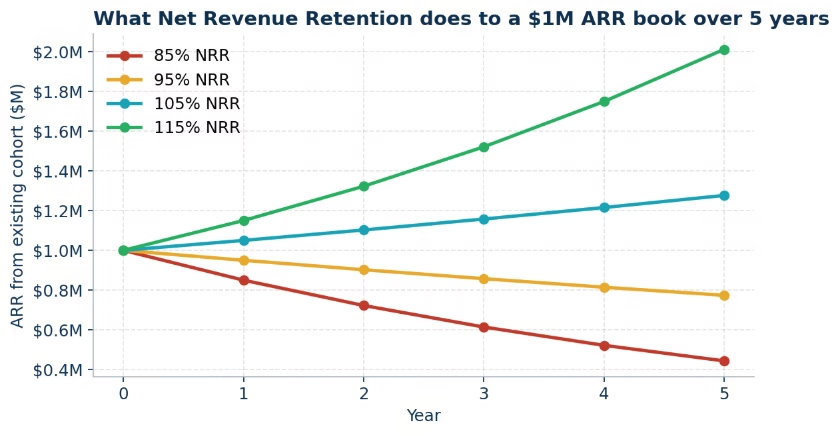
Start with $1M of ARR. Five years later:
- At 85% NRR, the book is worth $444K. You lost more than half without selling a single cancellation conversation.
- At 115% NRR, the same book is worth $2.01M — doubled, with zero new logos.
Two levers that move NRR faster than anything else
1. Annual price escalators and/or general pricing increases.
Your input costs are going up every year. Your pricing should too. A 5% annual escalator on a $3,000/month client is $180/month. If you don’t have automatic price escalators built in, revisit your pricing every ~12-18 months.
2. A quarterly expansion motion, not a hopeful email.
Build a customer review cadence. Every quarter the account owner should bring three things: outcomes delivered, risks identified, and a named expansion play. Most founders “cross-sell by what feels right” The winners take a calculated approach and cross-sell on a calendar.
Ways Proview tracks this;
We don’t look at NRR as a single number. We cohort it three ways:
- By signup month (is retention getting better or worse over time?)
- By segment (which buyer profile retains; which doesn’t?)
- By service line (which SKU is the retention anchor vs. the churn driver?)
That gives you a comprehensive view to find the leaks.
Want to see what your true retention really looks like? We can build it for you in your first week?